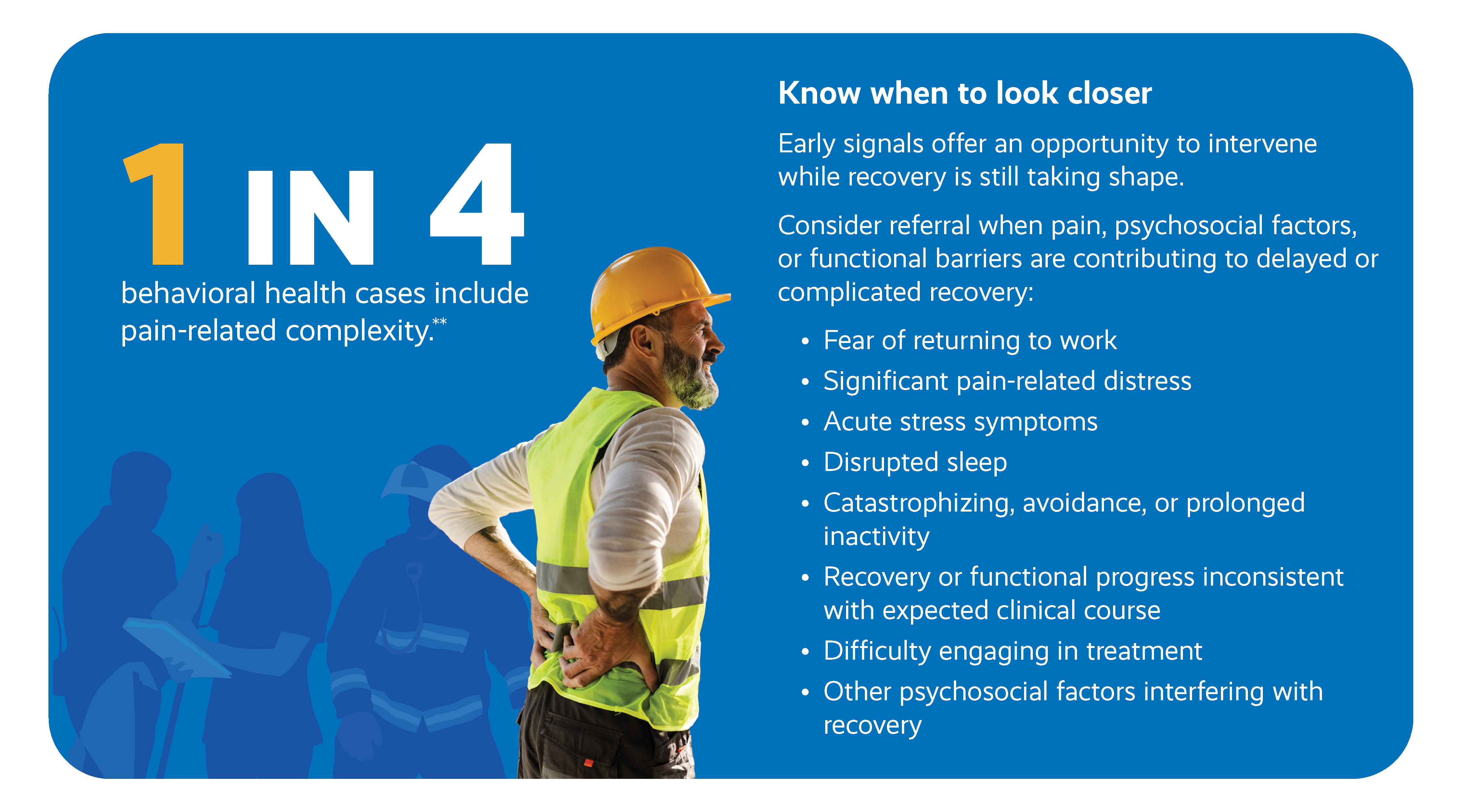
Pain-related cases account for 20% of high cost workers' compensation claims.
Pain is a common, and often complex, part of workers’ compensation and can be a significant driver of claim cost and duration.
This session will explore how pain pathways work, why physical and emotional pain are connected, and how early signs such as fear avoidance, multiple or changing pain types, and changes in behavior can point to a complex recovery before chronic pain takes hold. In addition, it will examine how individualized clinical evaluation and evidence-based care planning can help claims professionals recognize when more support is needed and determine the right solution for each patient.
Learning Objectives
At the end of this session, attendees will be able to:
• Understand how pain pathways work and recognize key risk factors that can contribute to the progression from acute to chronic pain.
• Identify the clinical, behavioral, and social signals that can indicate a complex pain case and the need for additional intervention.
• Apply a more individualized solution to address pain and pain-related barriers to support recovery.
Presenters
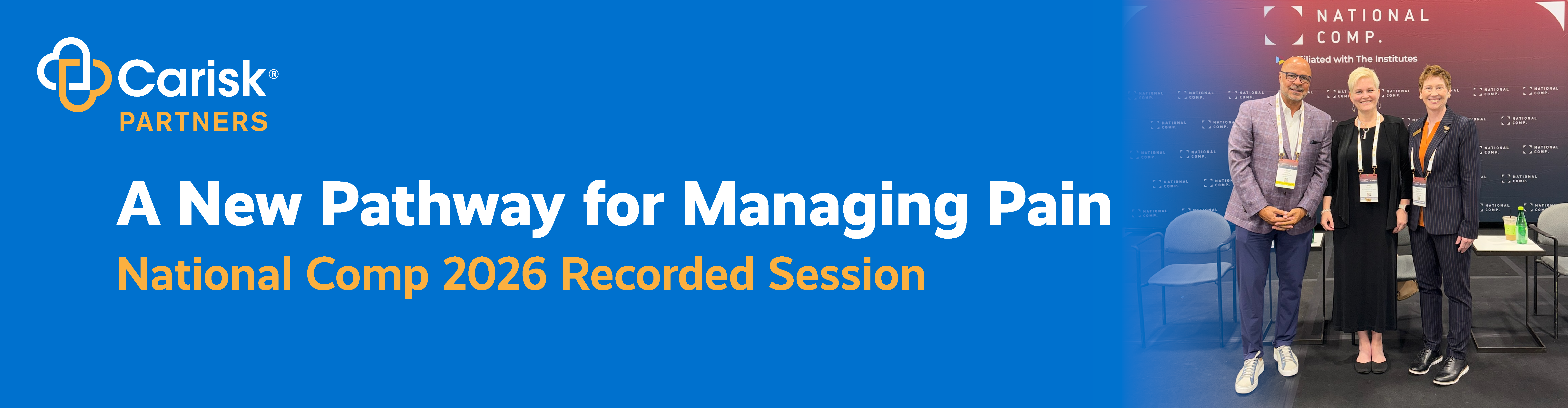
Joseph Berardo, Jr. — Executive Chairman of Carisk Partners
Natasha Charleston, LCPC, CRC, CISM, EMDR — Director of Behavioral Health Services
Amy Kolarova, DO, FAAPM&R — Physical Medicine and Rehabilitation